
Why Yellow Leaves in Hydroponic NFT Systems Matter for Yield and Quality
Yellow leaves in hydroponic NFT systems are often an early sign of nutrient stress and broader system imbalance, especially in enclosed lettuce and herb production. For commercial growers, this is more than a cosmetic issue. Visible yellowing can quickly push a crop below commercial grade, turning what should be a marketable harvest into downgraded or discarded product. In tightly run hydroponic operations, that difference directly hits margins, labour efficiency, and customer confidence.
Because NFT channels operate with relatively low volumes of recirculating solution, they have limited buffer capacity. Small drifts in nutrition, pH, temperature, or flow can show up on the leaves in a matter of days. Yellowing is therefore a useful warning signal, but only if it is read as part of the whole system context. Instead of treating it as a single “symptom” with a single “cure,” it should trigger a structured review of nutrient formulation, environmental conditions, and system design. 1 2 3
For commercial NFT growers, recurring yellowing isn’t a cosmetic issue – it’s a profit leak. In mixed herb and lettuce systems, we routinely see:
- 5–15% loss in saleable yield due to downgraded or discarded product
- Higher labour costs from sorting and trimming
- Increased risk of losing contracts that require consistent grade
If you’re seeing yellowing across several channels each cycle, it’s usually a system issue, not “just iron.”
How Shared Nutrient Solutions Cause Micronutrient Imbalances and Yellow Leaves in NFT Systems
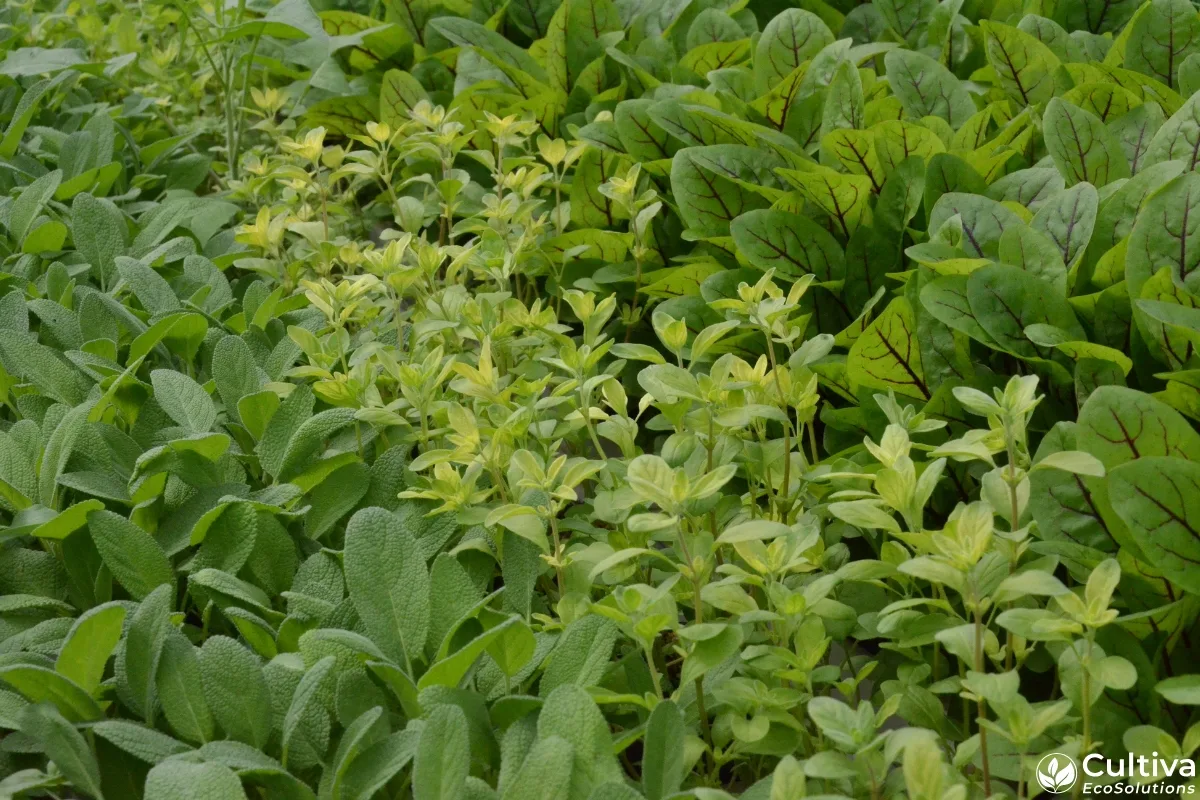
One of the fundamental challenges in hydroponic NFT systems is that multiple species often share the same nutrient solution. Lettuce, basil, oregano, lemon balm and other herbs do not have identical nutritional needs, yet they are frequently supplied with a single recipe. When that shared formula is tuned for one crop, others may be slightly overfed in some elements and underfed in others. Over time, these imbalances can surface as yellow leaves in the more sensitive species.
Micronutrients are particularly vulnerable in this setup. Elements such as iron, manganese, zinc and boron are required in very small amounts but have a narrow window between deficiency and toxicity. Factors like pH, water source, chelate type and mixing order can all affect their solubility and availability. In a shared NFT system, even a modest shift can deprive certain plants of key micronutrients while others seem unaffected. This is why yellowing often appears in specific species or varieties first, even when the general recipe looks correct on paper.
Species-Specific pH Ranges in Hydroponics and Their Impact on Nutrient Uptake and Leaf Colour
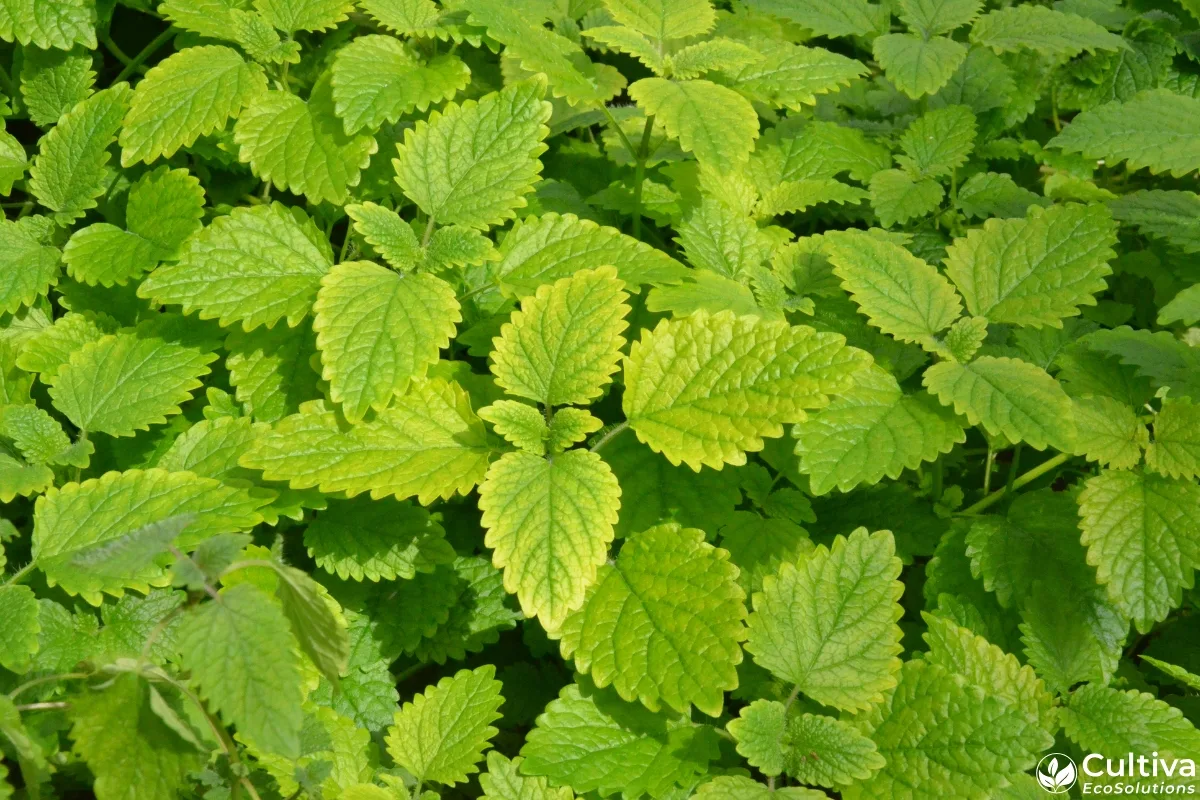
Even with a balanced nutrient solution, plants will struggle if the pH is outside their comfort zone. Nutrient availability in hydroponics is strongly pH-dependent, and different species prefer slightly different ranges. In practice, this means that a “good” system pH for one crop may already be limiting for another sharing the same NFT line. As availability of certain ions drops at pH extremes, yellow leaves can quickly develop, particularly in young, actively growing tissue.
For example, the optimal pH for oregano in hydroponic cultivation is typically around 6.0 to 7.0, while lemon balm tends to prefer a slightly more acidic range of 5.5 to 6.5. If the system is kept closer to 7.0 to satisfy oregano, lemon balm may begin to show early signs of chlorosis due to reduced availability of certain micronutrients. Conversely, maintaining the system consistently below 6.0 might favour lemon balm but gradually reduce efficiency for oregano. In mixed-species NFT systems, pH management therefore becomes a balancing act, and leaf yellowing is often the first visible sign that the compromise is no longer working.
Root Competition and Limited Root Space in NFT Channels as Causes of Yellow Leaves
NFT channels offer a compact, low-volume way to grow many plants, but this efficiency comes at the cost of root space. As plants mature, their roots expand and begin to compete intensely for oxygen, nutrients and physical space. In confined channels, stronger or faster-growing plants often dominate the flow, while weaker ones are partially shaded or displaced. This root-level competition can result in chronic stress for certain plants, which then express that stress as yellow leaves, reduced vigour and uneven growth.
From a management perspective, it is important to recognize yellowing as a possible sign of crowding rather than only a chemical imbalance. When roots create dense mats, oxygen transfer into the nutrient film can be limited, and micro-zones of stagnation may develop along the channel, creating conditions that also favour fungal root pathogens in hydroponic systems. Plants located in these less favourable micro-environments may experience intermittent hypoxia and inconsistent supply of ions. Over time, this combination of stress factors produces the kind of diffuse, systemic yellowing that is easy to blame on a missing element but is actually rooted in physical congestion and design constraints.
How NFT Channel Position and Water Delivery Create Uneven Feeding and Chlorosis
Another structural aspect of NFT systems that influences yellowing is plant position within the channels. Nutrient solution enters at one end and exits at the other, and even in well-designed systems there can be subtle gradients in flow rate, oxygen levels, temperature and nutrient concentration along the way. Plants located at the far end of a long channel may receive a slightly warmer, more depleted solution than those at the inlet. Over time, these small differences accumulate, and downstream plants may show yellow leaves as a sign of chronic undernourishment.
In multi-channel arrays, pump performance, channel slope, and minor blockages can further increase variability. A channel that is slightly higher or lower than intended may carry a thinner or thicker nutrient film, altering contact between roots and solution. Where the film is too shallow or intermittent, some plants will repeatedly experience “dry” intervals followed by sudden flows, which can stress both roots and leaves. When diagnosing yellowing in NFT systems, it is therefore critical to consider not only the recipe but also hydraulic consistency, channel leveling, and how plant placement influences effective feeding over time. 4
Environmental Stress in Hydroponic NFT Systems: Light, Temperature and Yellowing Episodes
Not all yellow leaves in hydroponic NFT systems are driven purely by nutrition. Many species are especially sensitive to transitional periods throughout the year, when environmental conditions shift rapidly. The start of supplementary lighting, for instance, changes the daily light integral and can alter canopy temperature and transpiration patterns. If nutrient supply and irrigation strategies are not adjusted accordingly, plants may experience a temporary mismatch between demand and supply, which shows up as yellowing and soft growth.
Temperature changes and day–night temperature differences are equally important. Sudden cold nights or warm days can shift root-zone temperature and affect both nutrient uptake and metabolic rates. Some herbs are particularly responsive to these fluctuations, and even a short window of stress can leave a visible imprint on foliage. When yellow leaves appear around the same time as lighting upgrades, seasonal transitions or heating adjustments, it is often a sign that environmental controls and nutrient strategies need to be harmonised rather than a simple deficiency in the recipe.
| Environmental trigger in NFT system | Yellow-leaf symptoms and corrective actions |
|---|---|
| Start of supplementary lighting | Rapid increase in daily light integral (DLI) raises canopy temperature and transpiration, causing soft growth and yellow leaves in hydroponic NFT channels. Reduce light ramp-up speed, adjust irrigation frequency, and slightly increase EC to match the new demand. |
| Seasonal transitions (autumn–winter / winter–spring) | Changes in day length, humidity and light intensity create a mismatch between nutrient supply and plant demand, leading to diffuse chlorosis. Recalibrate target EC and pH, update fertigation schedule, and review crop-specific setpoints for mixed-species NFT systems. |
| Large day–night temperature differences | Big swings in air and root-zone temperature slow nutrient uptake and trigger interveinal yellowing on young leaves. Narrow the DIF, stabilise root-zone temperature, and keep night-time EC and flow consistent. |
| Sudden cold nights or heat waves | Cold roots or overheated canopies reduce root pressure and disturb ion balance in the recirculating solution, producing pale, yellow leaves. Use buffering tanks, insulation and shading to keep solution temperature within the optimal range for each crop. |
| Uncoordinated changes in heating, ventilation or dehumidification | Adjusting HVAC or dehumidifiers without updating fertigation strategy disrupts VPD and transpiration, so plants show yellow leaves even when the nutrient recipe is correct. Re-check VPD targets and synchronise climate settings with irrigation and nutrient management. |
Why Adding Iron Chelate Alone Rarely Solves Yellow Leaves in NFT Systems
Because iron deficiency often presents as interveinal chlorosis, many growers react to yellow leaves in NFT systems by adding iron chelate to the nutrient tank. While this intervention can help in cases of true iron shortage, it is far from a universal solution. When the underlying issue is pH-driven availability, root competition, uneven flow or environmental stress, additional iron may remain unused in the solution while yellowing continues. This can lead to frustration and a false sense that the system is “mysteriously” unstable.
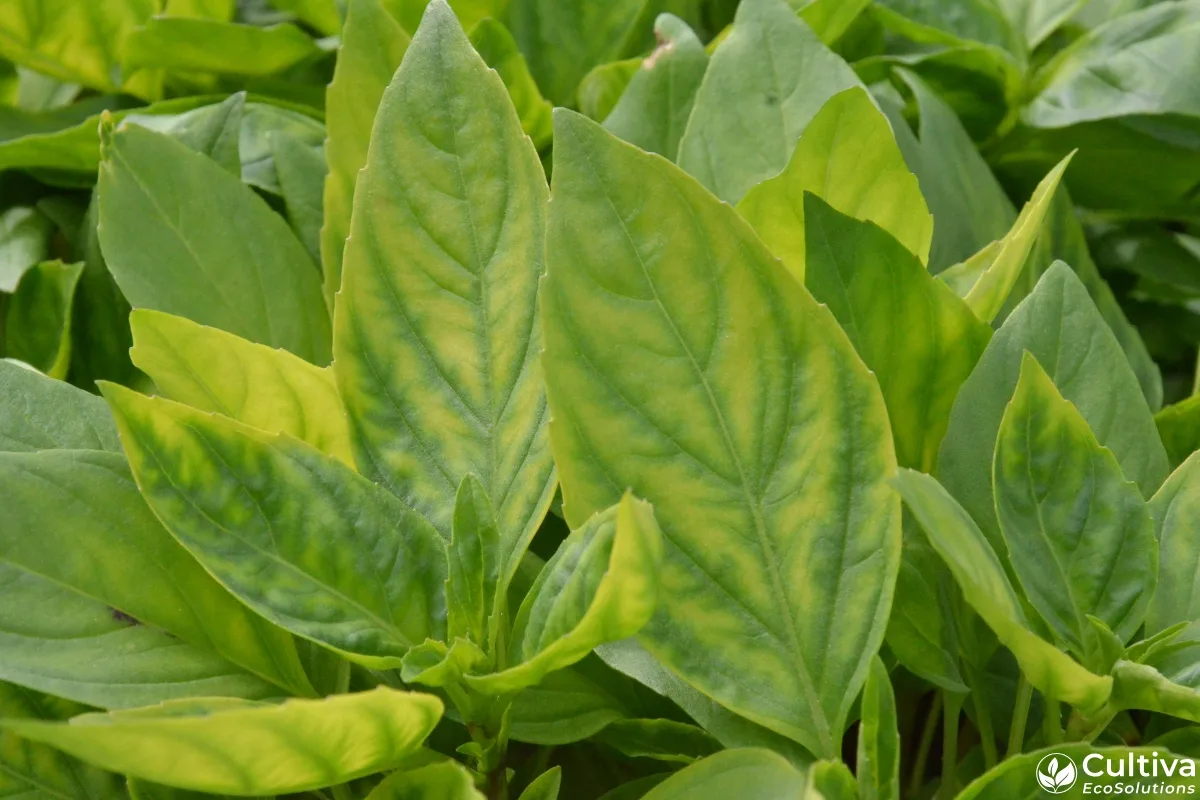
Relying on iron chelate alone also risks masking the need for deeper diagnostics. Excessive focus on a single element can delay the identification of structural flaws, such as poorly balanced multi-species recipes, overloaded channels or inadequate monitoring. In extreme cases, repeated corrections with iron and other single elements can push the solution away from a balanced profile, compounding other deficiencies or toxicities. A more robust approach is to treat yellow leaves as a multi-factor signal and to use targeted analyses, rather than quick fixes, to guide interventions.
Monitoring Yellow Leaves in NFT Systems and When to Seek Hydroponics Advisory Support
Effectively managing yellow leaves in hydroponic NFT systems begins with disciplined monitoring. This includes regular tracking of pH and electrical conductivity, but also broader observation of channel flow, root density, temperature patterns and the specific behaviour of each species in the system. Recording when and where yellowing appears – which channels, which positions, which crops – helps distinguish between a single nutrient issue and a wider design or environmental challenge. Over time, this data supports more precise adjustments and reduces reliance on guesswork.
For commercial operations, it is often valuable to combine internal monitoring with external expertise. Cultiva EcoSolutions team, can help you interpret yellowing patterns in the context of crop physiology, nutrient chemistry and system engineering. Through structured audits and tailored recommendations, we support growers in moving from reactive fixes to proactive, system-level design and management. When yellow leaves are treated as a source of information rather than just a defect, NFT systems become more resilient, more predictable and better aligned with commercial quality standards.
Frequently Asked Questions About Yellow Leaves in Hydroponic NFT Systems
Yellow leaves in hydroponic NFT systems are an early warning of nutrient stress and overall system imbalance, not just a cosmetic issue. In commercial lettuce and herb production they often signal lost commercial grade, downgraded product and higher labour for trimming. Recurrent yellowing across channels usually points to a systemic problem in nutrition, pH, flow or climate control that should be addressed at system level.
Yellow leaves in NFT channels typically result from a combination of shared nutrient solutions, micronutrient imbalances, off-target pH, root competition and environmental stress. Mixed-species systems (for example basil, oregano and lemon balm) are especially vulnerable when one recipe serves all crops. Crowded roots, uneven channel slopes, pump performance issues and seasonal changes in light and temperature further aggravate chlorosis and uneven growth.
To diagnose yellow leaves in NFT systems, start by mapping where and on which species symptoms appear, then check pH and EC stability, channel flow and root density. Interveinal chlorosis on young leaves suggests micronutrient or pH issues, while diffuse yellowing along crowded or downstream positions often indicates root congestion, hypoxia or underfeeding caused by hydraulic inconsistencies in the NFT channels.
Adding iron chelate alone rarely fixes yellow leaves in NFT systems. It only helps when true iron deficiency is the primary problem and pH, flow and root health are already under control. If the real cause is mixed-crop recipes, unstable pH, uneven distribution, temperature swings or root stress, extra iron will stay unused in the solution and chlorosis will continue despite the correction.
You should seek specialist hydroponics consulting when yellow leaves recur every cycle in multiple NFT channels, especially if basic pH, EC and recipe corrections do not stabilise the crop. External advisors can audit nutrient formulation, species-specific pH ranges, channel design, root-zone conditions and climate strategy, helping commercial growers protect colour, yield and contract-grade quality instead of reacting with one-off fixes.

References
- Langenfeld, N. J. , Fernandez Pinto, D. , Faust, J. E. , Heins, R. & Bugbee, B. (2022). Principles of Nutrient and Water Management for Indoor Agriculture. Sustainability , 14(16), 10204. 🌐 Language: | View Article
- Morgan, L. (2021). Plant nutrition and nutrient formulation. In Hydroponics and protected cultivation: a practical guide . CABI . 🌐 Language: | View PDF
- Palmitessa, O. D. , Signore, A. & Santamaria, P. (2024). Advancements and future perspectives in nutrient film technique hydroponic system: a comprehensive review and bibliometric analysis. Frontiers in Plant Science , 15, 1504792. 🌐 Language: | View Article
- López-Pozos, R. , Martínez-Gutiérrez, G. A. , Pérez-Pacheco, R. & Urrestarazu, M. (2011). The Effects of Slope and Channel Nutrient Solution Gap Number on the Yield of Tomato Crops by a Nutrient Film Technique System under a Warm Climate. HortScience , 46(5), 727–729. 🌐 Language: | View Article