What Is Watermelon Trellising? Benefits for Tropical and Subtropical Fields
Watermelon trellising in tropical and subtropical climates is a direct, field-ready way to reduce soil-borne disease pressure, improve fruit quality, and support food-safety compliance. By lifting fruit off the ground and opening the canopy to airflow, growers can curb humidity-driven fungal issues, protect marketable appearance, and move toward premium markets that value GLOBALG.A.P. and IFS-aligned practices.
Why Watermelon Trellising Works in Humid/Tropical Climates
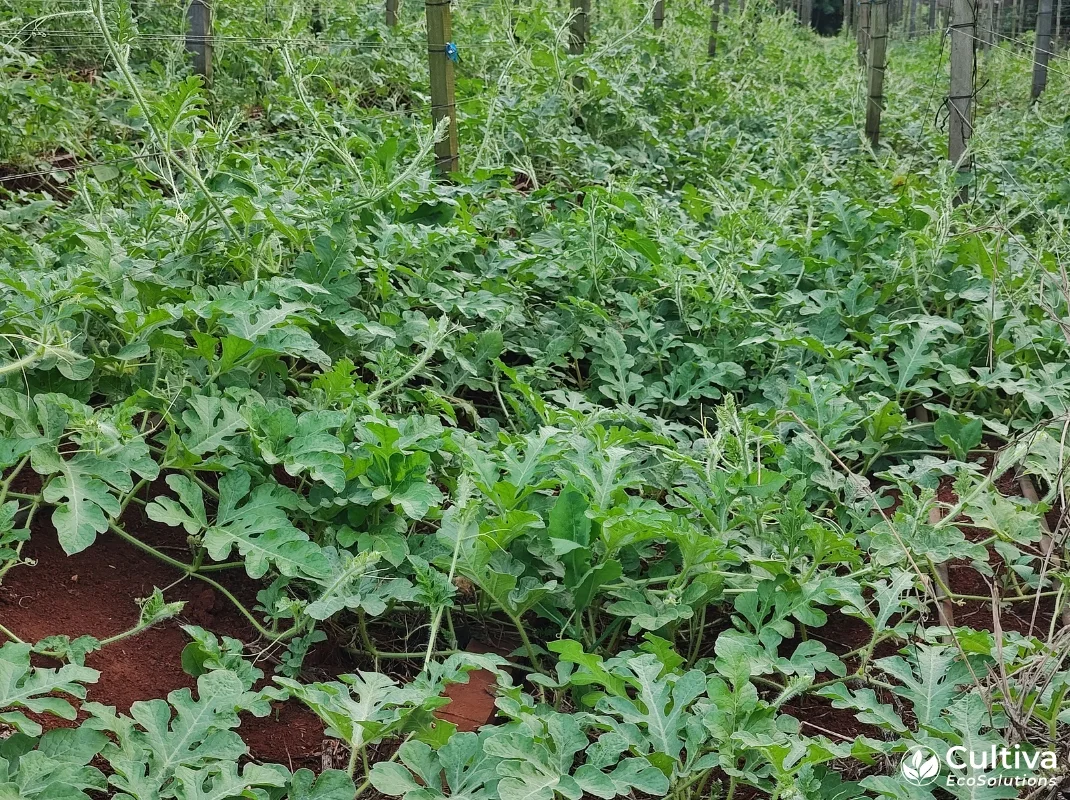
High humidity and frequent rainfall amplify two core risks: soil contamination and prolonged leaf/fruit wetness. Watermelon set on bare soil is exposed to inoculum splash, mud, and pests; a dense, still canopy traps moisture that pathogens exploit. Trellising and simple support systems address both vectors by creating physical separation from the soil and by increasing air exchange around foliage and fruit.
In practice, this is less about “new technology” and more about targeted risk reduction. Supports act as a barrier against contaminated surfaces, while vertical growth opens the canopy for better air exchange. Together, these small design choices compound into fewer infections and cleaner harvests.
Disease Reduction: Less Soil Contact, Better Airflow, Lower Leaf Wetness
When fruit rests on soil, it sits at the interface of splash-borne pathogens and decomposer organisms. Lifting fruit on cradles, nets, or mulch decreases contact with contaminated surfaces and reduces opportunities for Fusarium wilt and anthracnose to spread via soil and debris. Field crews also observe fruit more easily, identifying issues early—before they cascade.
Airflow is the second lever. Training vines onto supports opens the canopy, speeds drying, and lowers leaf-surface humidity, conditions that are less favorable for downy mildew. Even modest improvements in air movement can reduce the duration of leaf wetness following rain or irrigation events, making the environment less hospitable to common cucurbit pathogens.
| Risk / Issue | What drives it | How trellising & supports reduce it |
|---|---|---|
| Soil-borne pathogens (Fusarium wilt, anthracnose) | Soil contact and splash during rain/irrigation; contaminated surfaces | Fruit off the ground (cradles/nets); mulch barrier; cleaner aisles for sanitation |
| Downy mildew & foliar fungi | High humidity, still canopy, prolonged leaf wetness | Open canopy and better airflow → faster drying; row orientation supports air exchange |
| Physical defects (flat spots, rot, cracking) | Wet ground contact; pressure points on fruit | Elevated fruit; slings/netting distribute weight; more uniform size/shape |
| Food-safety contamination | Soil, manure, standing water in harvest areas | Reduced ground contact; defined harvest zone; alignment with GLOBALG.A.P. IFA / IFS SOPs |
| Labor strain & slow scouting | Frequent bending; fruit hidden under foliage | Ergonomic access to hanging fruit; faster inspections and decisions |
| Land-use efficiency | Horizontal sprawl limits planting density | Higher planting density using vertical space with maintained aeration |
Fruit Quality, Uniformity, and Shelf Life: Prevent Flat Spots, Rot, Cracking
Ground contact deforms fruit and creates flat spots, rot, and cracking that downgrade appearance and price. Wet soil increases the chance of rot initiation at the contact point or microcracks from repeated wetting/drying cycles. Elevating the fruit prevents these defects, yielding more uniform size and shape that buyers prefer.
These handling advantages carry into storage. Cleaner exteriors and reduced surface damage mean fewer entry points for decay organisms, supporting longer shelf life and more predictable shipments. That reliability matters for exporters and premium retail programs where rejections are costly.
Higher Planting Density and Land-Use Efficiency in Field Cultivation
Vertical growing unlocks higher planting densities because vines use vertical rather than horizontal space. In land-limited or high-value fields, that translates to more plants per unit area without proportionally increasing disease risk. The improved aeration helps maintain canopy health even as density rises.
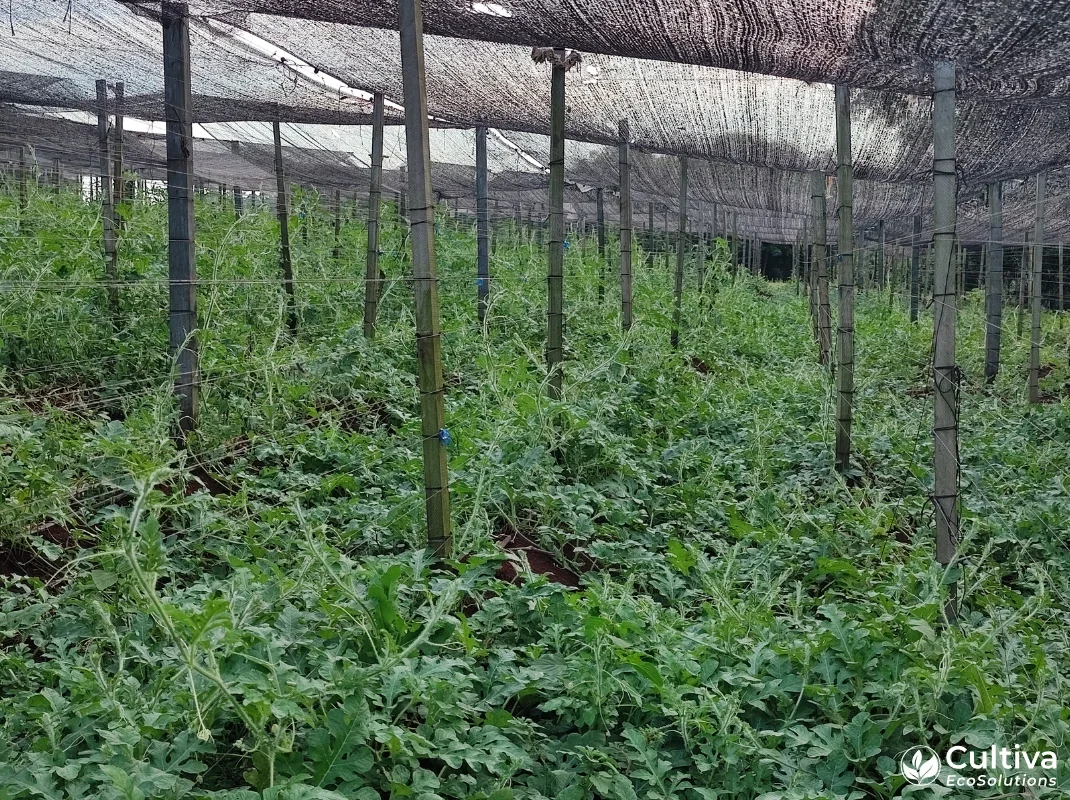
For growers who have maximized horizontal layouts, trellising is a practical path to incremental yield without acquiring additional land. It also simplifies row access by keeping fruit in a defined harvest zone rather than scattered under foliage.
Labor Efficiency and Ergonomics: Easier Harvesting and Faster Scouting
Supported, hanging fruit reduces bending and awkward reaches. Slinging heavy fruit distributes weight and provides a stable presentation for cuts and checks—small changes that add up over an entire season. Better ergonomics can lower strain injuries and keep crews efficient.
Open canopies also make scouting faster. With fruit visible and reachable, teams can spot lesions, frass, or insect activity earlier. That speed tightens the feedback loop between monitoring and action, improving the effectiveness of field interventions.
Food-Safety Compliance: GLOBALG.A.P. and IFS Readiness (Reduced Contamination Risk)
Minimizing soil contact is central to modern food-safety systems. Supports reduce cross-contamination from soil splash, manure, and standing water, aligning with GLOBALG.A.P. IFA (Integrated Farm Assurance) certification and IFS expectations around hazard control and preventive practices. Cleaner fruit and clearer aisles also make it easier to implement and document sanitation, PPE use, and harvest hygiene. 1 2
While no practice “eliminates” all risk, trellising meaningfully reduces exposure points and makes compliance more auditable: defined harvest zones, fewer ground-contact hazards, and simpler cleaning protocols. For exporters targeting premium markets, these incremental controls strengthen due diligence and buyer confidence.
Practical Limits and Setup: Trellis Strength, Slings/Netting, Pilot Blocks
Watermelon is heavy; slings or netting should be used for larger cultivars to prevent stem tearing and pressure points. Structures must be stable under wind loads, with secure anchoring and safe working heights. Start with a pilot block to adapt support spacing, sling materials, and labor flows to local conditions.
Site context still matters—e.g., soil type, row orientation, and prevailing winds. Trellising should complement, not replace, core agronomy: crop rotation, sanitation, and irrigation scheduling to avoid prolonged leaf wetness, plus targeted IPM. Together, these measures compound into a resilient system.
Get Expert Support: Cultiva EcoSolutions (Design Reviews, IPM Integration, GLOBALG.A.P.)
If you’re weighing trellising for open-field watermelon, Cultiva EcoSolutions can help translate principles into field reality—design reviews, density/layout planning, integrated pest management (IPM) consulting, and GLOBALG.A.P./IFS documentation and audit prep. Our approach is pragmatic: start with your current constraints, pilot what works, and scale only what moves yield, quality, and compliance in tandem. If you’d like a brief, data-led look at your field context, we’re happy to assess options and outline a stepwise path.
Cultiva EcoSolutions Certification Highlight — GLOBALG.A.P. Registered Trainer Credential

Frequently Asked Questions About Watermelon Trellising in Humid and Tropical Climates
Watermelon trellising is a support system that lifts vines and fruit off the ground using posts, wires and slings. In humid and tropical climates it reduces soil-borne disease pressure, improves airflow around foliage, and keeps fruit cleaner. Together, these effects support higher marketable yield, better fruit quality and stronger alignment with modern food-safety standards.
Watermelon trellising reduces fungal disease by cutting soil contact and shortening leaf-wetness periods. Fruit and vines are lifted away from splash-borne inoculum, while a more open canopy dries faster after rain or irrigation. Better airflow and defined rows make it harder for Fusarium, anthracnose and downy mildew to spread and easier for scouts to spot problems early.
Vertical trellising improves watermelon fruit quality by preventing flat spots, rot and cracking caused by wet ground contact and pressure points. Slings or netting support fruit weight and encourage more uniform shape and size. Cleaner rinds and fewer microcracks also mean fewer entry points for decay organisms, which helps extend shelf life and reduce rejection rates in the supply chain.
Yes, trellising lets watermelon vines grow vertically instead of sprawling, so growers can safely increase planting density. Using vertical space improves land-use efficiency in high-value or land-limited fields while maintaining aeration. Defined harvest corridors also make traffic and irrigation easier to manage, supporting incremental yield gains without expanding total field area.
Watermelon trellising supports GLOBALG.A.P. and IFS by reducing soil contact, splash contamination and standing-water exposure in harvest areas. Raised fruit, cleaner aisles and clearer harvest zones make hygiene, PPE and sanitation procedures easier to implement and document. These practical controls strengthen hazard prevention, audit readiness and buyer confidence for export and premium retail programs.
References
- IFS Management GmbH (2023, April). IFS Food Standard Version 8: Standard for auditing product and process compliance in relation to food safety and quality. IFS Food . 🌐 Language: | View PDF
- GLOBALG.A.P. (n.d.). Integrated Farm Assurance (IFA) – Fruit and Vegetables. GLOBALG.A.P. . 🌐 Language: | View Source